The Sustainable Vegetarian/ Vegan/Omnivore/ETC.

In the months ahead, I’m hoping to explore a little more closely what we CAN eat. What drove many of us to vegetarianism years ago was learning about the unhealthy nature of the beef and poultry industries — both for us and for the planet. In THE OMNIVORE’S DILEMMA, Michael Pollan took that line of thinking further, starting with his observations about corn, ethanol, and what we might call Big Grain. Monsanto, anyone?

What’s true of grain and beef is true of soybeans too. There goes a protein-rich mainstay of the traditional vegan diet. Now folks are turning to coconut oil for salvation. But you know, ANY monoculture crop is a problem — a BIG problem, sorry to say! Just google Indonesia and rain forests if you don’t believe me. Those coconut trees have to grow someplace, and it won’t be in New England.

So what CAN we eat?  The impetus to buy, cook and eat whatever locally grown foods may thrive in your neighborhood maybe isn’t quite as trendy as the idea of being vegan. Part of the problem is that everyone’s microclimate is different and that prevents locally-grown from easily translating into a global movement. But it shouldn’t. And locally grown is part of the answer.

But we’re not there yet.

Your thoughts?

Objects ~ Why We Love ‘Em

Somehow it all seems to revolve around telling. Writing, editing, telling stories … what one friend refers to as “drinking tea and swapping lies.”
Lies, truth, fact or fiction … in the swirl of the Internet, the distinctions aren’t so clear. But in truth, they probably never were.

And I digress. Other stuff I’ve put my shoulder to:  An introduction for a children’s book of Walt Whitman verse, when I was executive director of the Walt Whitman Association in Camden. … Press releases about Jacques Cousteau, Alan King, Harry Reasoner et al. when I worked for ABC-TV. Am I dating myself? Yeahhh. … Stories about children’s television and about the Philadelphia Folk Festival; about Paolo Soleri and life on a reservation in Montana. … A bio for the catalog of a fabulous artist who paints the life of her childhood in the coal camps on old quilts …. And a lot of journals, some songs, some poems.

It all comes out of our memories and our daily observations in the end … and from that mysterious place where ideas form, so that when they come through us, we say, privately, Whoa! Where’d THAT come from?

We think we are so special, we humans. And we are. But so are the whales and the elephants and all the rest of them. I always say, we just got lucky. We got the thumbs. The opposable ones.  But as for the brains, well, don’t you wonder what the whales and the elephants are thinking right now about how we’ve managed things?

But, says Jalal ad Din, We were born with wings.  And we were born with a love in our hearts for the work we were meant to do. May we do it well, and the planet thrive, as we go forward.

Not fare well,
But fare forward, voyagers.

– T.S. Eliot, “The Dry Salvages”

Q&A

Q&A

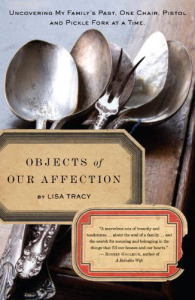
In Objects Of Our Affection, you write, “We’re Americans in the 21st century. We have more stuff in storage bins and basements and attics and back rooms than we can ever use in a lifetime. Or three… We can never be free of our stuff until we have dealt with the stories it carries.” Can you explain?

Particularly now, in the last couple of years, I think people have become much more aware of a drive for simplicity. We feel a desire for simplicity in our lives, of freedom from time constraints, clutter, a complicated lifestyle. And the things we own and carry with us do take up precious time, as well as space.

But what I discovered in the course of researching and writing Objects Of Our Affection is that what we are really attached to is not so much the object as the memories it evokes, the people it makes us think of. Even when we acquire something new, we immediately have a story to go with it: Who gave it to us, where we bought it and why, how it has become part of our lives. THAT’S what is really hard to let go of, even more than the thing itself.

Do you ever hear from the people who bought your family furniture—do you have any idea where those objects are now?

For the most part, no, and that was tough at first. We did hear from one woman who was interested in the history of the love seat she bought. Some of the stuff was bought by individuals like her for themselves, but some was bought by dealers, so heaven knows where it is by now. The auction house we dealt with sort of protects its buyers, in that they won’t tell you where the stuff went. It felt a little bit like we had put our family up for adoption. The things are like family… you’d really like to get an email from that favorite chair, you know?

Why did you decide to take your family’s furniture to auction, and when did you decide you had a memoir in the making?

After my mom died, my sister and I stored the furniture for almost 10 years. We both had our own houses full of furniture, including a few family heirlooms. We knew couldn’t just keep on paying for those bins, and we weren’t using all these beautiful things that were in storage. This stuff was old. It couldn’t be good for it to just sit there and it didn’t seem fair—they could be showpieces for someone who really had the space to display them. So we decided on an auction, even though the idea of letting go of the family stuff made us wince, big time.

One morning, I woke up in my New Jersey rancher and looked around at the bedroom furniture that had belonged to my grandparents—just a bed and a bureau, but I started really thinking about how we were going to have to deal with it all, and I didn’t know how we could.

At that moment, it really felt as if my grandmother—she died when I was a little girl, and I’m named for her—it felt as if she actually came into the room, just a wisp of a presence. “Write about it,” she said. And I picked up a notebook and started writing.

Tell us a little bit about your own family. To what extent are they representative of Americans generally?

Our family is military, going back for generations. My father was an officer, and so were both of my grandfathers and three great-grands. One of my grandfathers was, in 1920, the most decorated man in the U.S. Army, according to records. He eventually became superintendent of Virginia Military Institute, during World War II. He was also directly responsible for building the Malinta Tunnel on Corregidor, in the Philippines, which was the American army’s first and final line of defense against the Japanese before the islands surrendered, and was where Douglas MacArthur took refuge for five months during that battle.

But for any military family, besides fighting wars, there was all the moving from post to post.

And that’s why I think this is such an American story.We are all on the move. All of us. We are such a transient nation. We move for work, for jobs, for better schools for our children, to be near our parents, or just because! And of course a military family moves sometimes once a year or even more. So my family’s experience really has something to tell us about how we deal with all our things.

What do you hope readers take away from Objects of Our Affection?

I hope it might help other people think about why we hang onto our things… and maybe to start exploring and telling their own stories about the family that’s in the furniture.

Where there are vampires … there’s hope?

Vampires – hope?

A few months ago, I picked up “Into the Woods” by Kim Harrison. I previously had little interest in vampires – had skipped Ann Rice entirely – but an interview with Ms. Harrison in Writer’s Digest had caught my attention. She had interesting things to say about writing, and when I found the book on the “new arrivals” table while grazing in a Saratoga Springs bookstore, I picked it up.

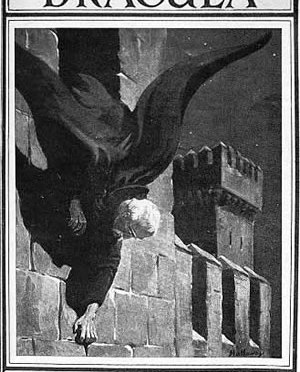
And it got me thinking. WHY are we so fascinated with the “undead” – with hordes of the horrific, the vampires, zombies, werewolves, demons and more? Witches, by comparison, seem positively benign, being human.

With Halloween just safely past, we’ve sailed past All Saints, All Souls, Day of the Dead and even Guy Fawkes Day, a cornucopia of holidays clustered around and behind what was once probably the most sacred day of the Celtic year, and lo, Ms. Rice returns to the field with “Prince Lestat” and a multimillion-dollar contract with Universal for “The Vampire Chronicles.”

So what’s the deal?

A little quick research into the attraction of “Twilight,” “True Blood,” “The Vampire Diaries” et al. pulls up everything from loss of control to … loss of control. It’s sexual. It’s political. It’s the perfect metaphor for troubled times.

That’s what I thought. Harrison’s vampires are so oddly human. They work for dark mob-boss type overlords from whom they can’t escape. They are victims of hostage syndrome – they love the thing that holds them captive. They have moments of decency and they live in fear. And lust. Their lives are chaotic and unpredictable, but they seize opportunities for forbidden love despite the risk. They’re conflicted about it too.

Don’t they sound familiar?

While looking at one article online, I was distracted by the news that an Arizona politician (no kidding) says there are vampires in the mines, and the assertion that “Nightcrawler” makes a vampire of the news media. On the sidebar was the truly scary news of more mass graves uncovered in Mexico. Vampires pale in comparison.

Perhaps that’s why we seek them out today. They are the iconic proof of our dark side, and yet they are vulnerable. And in that vulnerability lies, finally our hope: That we can ward off evil with a simple gesture and drive a stake through the heart of our darkest fears.


The Grapevine

“Lisa Tracy’s Objects of Our Affection is a lovely and loving book, revealing the life of her well-traveled military family not just through the furniture they chose to keep, but through what they lost and surrendered along the way. Moving from the heights of San Juan Hill to the courtyards of China’s Forbidden City, this book shows us why the possessions of our ancestors exert a profound influence upon our modern lives. Anyone who finds meaning and memory in the belongings of their forebears will enjoy this book.”

—Jeff Gammage, author of China Ghosts: My Daughter’s Journey
to America, My Passage to Fatherhood.

Objects of Our Affection is a memoir in belongings, right down to the salt in an old glass shaker with a dented lid. Being a born Southern story-teller, Lisa Tracy has captured beautifully why we love our belongings—not for their actual value but for the family stories they hold, and for the way they allow us to follow the threads of continuity in the red velvet fabric of life.”

—Susan Caba, author of Guilty Pleasures

“A bittersweet memoir that recounts a family’s history through the furnishings they had accumulated. Readers will never again be able to visit an auction house, antique shop, or second hand store without wondering what stories the items could tell.”

—Gail Caskey Winkler, author of Victorian Interior Decoration

“An instructive and compelling narrative about the stories that long-cherished family heirlooms can tell us, if only we will listen, this is a book that will strike a responsive chord with a wide audience.”

—Charles F. Bryan, Jr., Ph.D., President Emeritus, Virginia Historical Society

“Lisa Tracy’s Objects of Our Affection is a marvelous mix of tenacity and tenderness. Yes, it is about the history of certain carefully collected heirlooms; but it is also about something much greater… the soul of a family, any family, our expectations and regrets, our loves and losses, our search for meaning and belonging in the things that fill our houses and our hearts.”

—Robert Goolrick, author of A Reliable Wife

“Plush stories of love, war, life and death are lovingly tucked inside the drawers and chair springs of a remarkable family’s furnishings. Lisa Tracy brings them to life with tender humor and due respect.”

—Tanya Maria Barrientos, author of Family Resemblance

“This is a book that gathers emotional momentum as you read it. Gradually you realize it is a rare look at the women who have devoted their lives to the men who have fought America’s wars. I read the closing chapters with tears in my eyes.”

—Thomas Fleming, author of The Officers’ Wives and West Point: The Men and Times of the U.S.Military Academy

Bury My Heart

at Wounded Knee

I just pulled out of my Baggallini a small chamois pouch that contains a stone from Wounded Knee. I was there, just about this time five years ago. The Wounded Knee cemetery sits on a bluff overlooking miles and miles of grassland belonging to the Pine Ridge Reservation…if the Lakota who live there wouldn’t laugh at the idea of grassland belonging to anyone. I hadn’t felt so free or so peaceful in a long time, as I felt on the reservation. Go figure.

But I went there for a less than peaceful reason:

In the winter of 1891, my great-grandfather was dispatched from his infantry post in Wyoming to somewhere in South Dakota. The dates said he was probably one of hundreds of officers whose troops were sent to South Dakota just in case the Seventh Cavalry needed help. They didn’t, of course, need help in what I think is generally agreed to have been the infamous incident at the place we remember as Wounded Knee.

So I went there to get down on my knees at a stone monument weathered almost beyond reading, and to lay a little tobacco there, and to say a prayer. I’ve written about that and about the other things I learned about my family’s 200-some years as Americans and as a military family, in a book about the family furniture.

Part memoir, part military history, it is also a meditation on why we Americans are so attached to our stuff — and the destruction that attachment has sometimes caused.
It’s a beginning …

Untitled Post

4/10/13

It was about this time last year that we decided to rent the house. Yes, THAT one.

The house my grandparents built in 1942 … and which now, by some curious chance, has sheltered FIVE generations of the family.

What were the odds? If you’ve read OBJECTS OF OUR AFFECTION, you know the odds were supremely slim: This is a military family. And like many Americans, maybe most, we’re nomads. I counted once: Between the ages of 17 and 34, I personally moved 17 times.

But somehow we landed, and there we remained. Well, not really. More like, There we left our stuff. Five generations of it, ranging from my grandpa’s dress military uniform jacket and some evening garb of the grandmothers to my great-nephew’s discarded video games.

So it was June a year ago that we tackled the attic. See, we have this really small attic, and we had to empty as much as we could to make room for all the stuff that was actually occupying what you SEE of the house — we were renting it furnished, sort of, true. But there were lamps, books, clothes, bedding, dishes, oh my. You know. All the stuff you wouldn’t want someone else to have to cope with. Or break. Or lose. Or whatever.

It was a hell-bent-for-leather full month of eight-hour days in the heat. My sister and I sorted books, jewelry, stuffed animals, clothes, you name it. Oh, yeah, we didn’t just haul it out.  SORT is the operative word.  And that is why I am still here, updating this website.  Because I know how many more people like us are out there. You can’t just throw it out. You have to sift through it.

And that, as I keep reminding us all, is because of the stories the stuff contains. Yep, folks, that’s it. That’s the heart of the problem. Until we’ve sifted the stories, the stuff remains.

The Internet, fortunately, is our new fireside. I mean, it is the place we gather around, sing our songs, tell our tales, listen to our shamans.

In the weeks ahead, I will be trying to recapture the heat, dust, sound and fury that accompanied our excavation of 1 Pendleton Place. Stay tuned … but please, if you have a moving/excavating/STUFF story of your own to tell, weigh in. Post a comment!